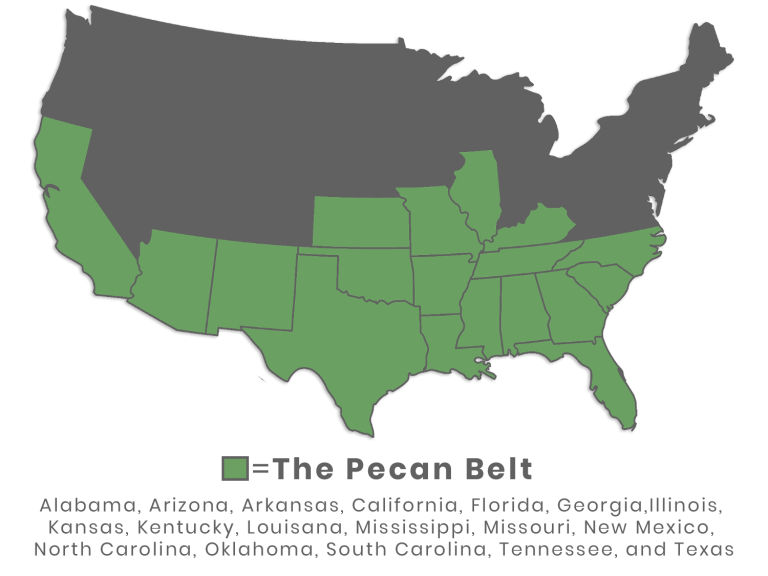
The Pecan ipmPIPE program was organized during 2008 and the winter and spring of 2009. Its development brought together pecan scientists, including members of the S-1049 Multistate Research Project, and pecan producers serving on the Pecan ipmPIPE Producer Advisory Board. The advisory board included representatives from pecan producer organizations and helped guide the planning, development, and launch of the original Pecan ipmPIPE website in April 2009. During the organization and planning phase, pecan scientists introduced the program to growers through poster and oral presentations at annual meetings across the pecan belt. The resulting stakeholder network was documented in producer-oriented publications, including the Fall 2008 issue of Pecan Grower and the April 2009 issue of Pecan South. The Pecan ipmPIPE network included more than 120 pecan producers who contributed near real-time field observations on pecan nut casebearer (PNC). Pecan nut casebearer served as the initial target of Phase I risk-assessment efforts. Information contributed through the network was intended to help pecan producers evaluate local pest activity, improve treatment timing, and make more informed pest-management decisions.
The initiative eventually became dormant following the retirement of several key personnel. However, the website remained online with support and funding from the Southern Integrated Pest Management Center and was renamed Ag Pest Monitor: Pecan. The establishment of the Pecan IPM Working Group in March 2026 marked the beginning of a renewed effort to update and expand the website. The working group is developing additional educational resources, monitoring tools, and pest-management content with the goal of making Ag Pest Monitor: Pecan a comprehensive, one-stop resource for pecan integrated pest management. Through collaboration among researchers, Extension professionals, producers, crop advisors, and industry partners, the updated platform will support timely communication and science-based pest-management decisions throughout the pecan-growing region.